

The Blog

air con vs fan
News

Air Conditioning or a Fan: Which Is Best for Your Home?

As a trusted air conditioning installer serving Portishead and the surrounding areas, AGW Gas Ltd is often asked whether homeowners should choose a fan or invest in air conditioning. While both can help you stay comfortable during warmer weather, they work in very different ways and offer very different results. How Does a Fan Work? A fan doesn’t actually lower the temperature of a room. Instead, it circulates air around your body, helping sweat evaporate more quickly and creating a cooling sensation on your skin. Fans are relatively inexpensive to buy and run, making them a popular choice for occasional use during warmer weather. However, when temperatures become particularly high, many homeowners find that fans simply move warm air around the room rather than providing meaningful cooling.   How Does Air Conditioning Work? Air conditioning systems actively remove heat from a room, lowering the indoor temperature and creating a more comfortable environment. Modern systems can maintain a consistent temperature regardless of how hot it becomes outside. Unlike fans, air conditioning can also: Reduce humidity levels Improve indoor air quality Filter dust, pollen and allergens Provide heating during colder months Cool multiple rooms or entire properties This makes air conditioning a practical year-round solution rather than a seasonal appliance.   Which is more cost-effective? A fan typically costs less to purchase and uses less electricity. However, it only provides temporary relief and may need to run continuously during hot weather. Modern air conditioning systems are far more energy-efficient than many people realise. Inverter technology allows systems to adjust their output automatically, helping to minimise energy consumption while maintaining a comfortable temperature. Because many systems also provide heating, homeowners can benefit from a single solution for year-round climate control.   The Best Rooms for Air Conditioning Domestic air conditioning is becoming increasingly popular in UK homes. It is particularly effective in: Bedrooms Home offices Living rooms Conservatories Garden rooms Loft conversions Open-plan kitchen and living areas These are often the warmest areas of the home and can benefit most from temperature control throughout the year.   Air Conditioning and UK Heatwaves With UK summers becoming warmer and heatwaves occurring more frequently, many homeowners are looking beyond portable fans and considering permanent cooling solutions. Air conditioning provides consistent comfort even during prolonged periods of hot weather, helping you sleep better, work more comfortably and enjoy your home regardless of outside temperatures.   So, Air Conditioning or a Fan? If you’re looking for a low-cost way to stay slightly cooler for a few days each year, a fan may be sufficient. However, if you want reliable cooling, improved air quality, lower humidity and year-round comfort, air conditioning is often the better long-term investment. At AGW Gas Ltd, we install, service and repair domestic air conditioning systems across Portishead, Clevedon, Nailsea, Weston-super-Mare, Chepstow, Caldicot and surrounding areas. Whether you’re looking to cool a single bedroom or install a complete home air conditioning system, our experienced engineers can help you find the right solution. Contact AGW Gas Ltd today to discuss domestic air conditioning installation for your home.  

Read More »
combi boiler
News

Combi Boilers Explained

If you’re considering a new boiler for your home, you’ve probably come across the term “combi boiler”. Short for combination boiler, a combi boiler provides both your central heating and hot water from one compact unit. As a local combi boiler installer covering Portishead and the surrounding areas, one of the most common questions we’re asked is whether a combi boiler is the right choice for a particular property. For many homes, the answer is yes – but it depends on your hot water demand, the size of your property and your existing heating system. In this guide, we’ll explain how combi boilers work, their advantages and disadvantages, and when you might want to consider an alternative such as a system boiler. Small Boiler, Big Job: How Does a Combi Boiler Work? One of the main reasons combi boilers are so popular is their simplicity. Unlike older heating systems that rely on a hot water cylinder or cold water storage tank, a combi boiler heats water directly from the mains whenever you turn on a tap. This means you get hot water when you need it, without having to store it first. The same boiler also heats water for your radiators, keeping your home warm throughout the colder months. Because everything is contained within one unit, combi boilers are often ideal for modern homes, flats and properties where space is at a premium.   Why Homeowners Choose Combi Boilers They Save Space No hot water cylinder. No loft tank. Just one compact boiler mounted on the wall. Hot Water On Demand Turn on the tap and the boiler gets to work straight away. There’s no waiting for stored water to heat up. Energy Efficient Modern combi boilers are designed to be highly efficient, helping reduce wasted energy and potentially lowering heating bills. Ideal for Smaller Homes For homes with one bathroom and average hot water usage, a combi boiler is often the perfect fit.     Are There Any Downsides? Combi boilers aren’t suitable for every property. If you have a larger home with multiple bathrooms being used at the same time, you may find a combi boiler struggles to keep up with demand. Likewise, if you’re planning a major extension or regularly have several showers running at once, it’s worth looking at whether a system boiler would be a better option.   Is a Combi Boiler Right For Your Home? A combi boiler could be ideal if: You have one or two bathrooms. You want to free up space. You’d like instant hot water. Your current boiler is old and inefficient. You want a straightforward heating system. If you’re unsure, we’re always happy to provide honest advice and help you compare your options, including whether a system boiler might be a better fit for your home.   Which Combi Boiler Brands Do We Recommend? Over the years we’ve installed boilers from most major manufacturers, but two brands consistently stand out. Worcester Bosch Worcester Bosch boilers are known for their reliability, excellent warranties and strong reputation amongst homeowners. Vaillant Vaillant boilers offer impressive efficiency, quiet operation and excellent performance, making them a popular choice for many households. The best boiler for your home will depend on your budget, property size and hot water requirements, which is why we always recommend getting professional advice before making a decision.   Looking After Your Combi Boiler Like any heating system, a combi boiler needs regular maintenance to keep it running safely and efficiently. Booking an annual boiler service can help identify minor issues before they become expensive problems and may also be required to maintain your manufacturer’s warranty. If your boiler develops a fault, prompt boiler repairs can often prevent further damage and get your heating and hot water back up and running quickly.   Frequently Asked Questions How long does a combi boiler last? Most modern combi boilers last between 10 and 15 years when properly maintained and serviced annually. Are combi boilers energy efficient? Yes. Modern condensing combi boilers are among the most energy-efficient heating systems available. Can a combi boiler run multiple showers? It depends on the boiler’s output. Larger combi boilers can support higher hot water demand, but larger households may benefit from a system boiler instead. Do combi boilers work with smart thermostats? Yes. Most modern combi boilers are compatible with smart heating controls.     Need Advice About a New Combi Boiler? Whether you’re replacing an old boiler or installing a completely new heating system, we’re here to help. As a trusted local heating engineer in Portishead, we provide honest advice, professional installations and ongoing support to help keep your home warm all year round. Get in touch today to discuss your options or request a free quotation.

Read More »
best boiler for a bungalow
News

Best boiler for for Bungalows in Clevedon

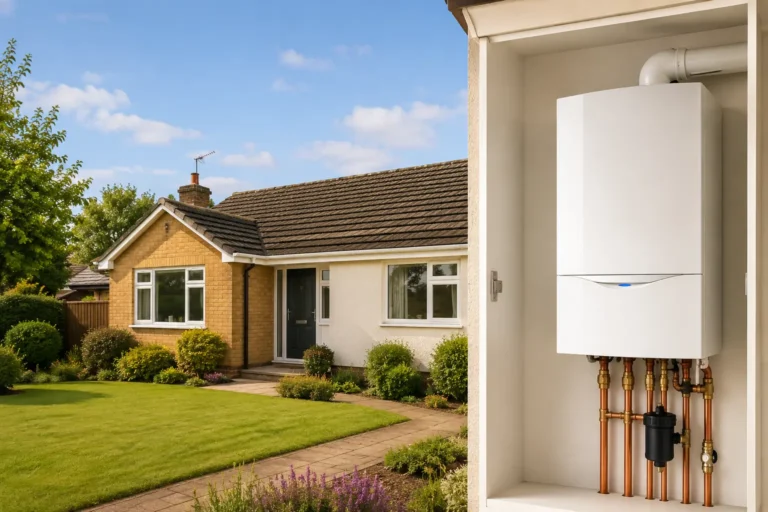
If you’re looking at a new boiler for your Clevedon bungalow, you’ll quickly realise it isn’t quite the same as upgrading the heating in a two-storey house. Bungalows have their own quirks. Pipe runs are often shorter, loft spaces are sometimes tighter than you think and hot water demand can vary massively depending on whether it’s a cosy two-bed retirement place or a larger detached property near the coast.  In this guide, we’ll walk through bungalow boiler options in plain English, so you can work out what suits your home, your layout and your budget. Why boiler choice differs for bungalows A bungalow might be single storey, but that doesn’t automatically make the heating system simple. In fact, we often find the opposite. Because everything is on one level, pipework tends to run across ceilings or under floors. In older Clevedon bungalows, especially those built in the 60s and 70s, we regularly see original microbore pipework and old gravity-fed hot water systems tucked away in airing cupboards. Unlike a house, where you might have an airing cupboard upstairs and easy access in the loft, bungalows sometimes have limited storage space. That affects whether a hot water cylinder will fit comfortably or whether a combi boiler bungalow setup makes more sense. There’s also heat demand to consider. A compact two-bedroom bungalow near Hill Road has very different requirements from a larger detached place out towards Walton St Mary.     Types of boilers suitable for bungalows Combi boiler bungalow installations A combi boiler bungalow installation is often the go-to option for smaller properties with one bathroom. Combi boilers heat water on demand and don’t need a separate hot water cylinder or cold water tank. They’re ideal if: You’ve only got one bathroom You want to free up space by removing tanks Your mains water pressure is decent We get asked a lot whether a combi can cope with a bungalow that has a kitchen tap and shower running at the same time. The answer depends entirely on incoming mains pressure. In parts of Clevedon, especially slightly higher ground, pressure can be a bit lower. We always test it before recommending a combi.   System boiler bungalow UK homes A system boiler bungalow UK installation is often a good middle ground for larger properties. This type of boiler works with a hot water cylinder but doesn’t need a tank in the loft. It suits bungalows with: Two bathrooms Higher hot water demand Families or frequent guests If you’ve got the cupboard space for a modern, well-insulated cylinder, a system boiler can give you stronger and more reliable hot water performance than some combis.   Regular boilers Regular or conventional boilers are less common in new installations now, but we still see them in older bungalow boiler options where there’s already a loft tank and a traditional cylinder setup. If the system is working well and you’ve got good pressure from a gravity-fed setup, sometimes it makes sense to replace like for like. That said, most homeowners upgrading to modern energy efficient boilers UK wide tend to move towards combi or system models for space saving and efficiency.     How to choose the right size and output One of the biggest mistakes we see is oversizing or undersizing the boiler size bungalow properties actually need. A small two-bed bungalow with 6 to 8 radiators may only need a boiler with a lower heating output. Installing a high-output unit in a property like that can mean short cycling, wasted energy and unnecessary wear. On the flip side, a larger bungalow with an extension or conservatory might need significantly more output, particularly if it has big radiators and two bathrooms. When we assess boiler size bungalow installations, we look at: Number and size of radiators Insulation levels Window type Hot water demand Mains water pressure It’s not guesswork. A proper heat loss calculation ensures you’re not paying to heat more than you need.     Energy efficiency and running costs Most modern boilers installed today are highly efficient condensing models. Upgrading from an old non-condensing boiler can noticeably reduce gas usage, especially in bungalows where heating tends to run steadily through colder months. Energy efficient boilers UK homeowners are installing now often include smart controls as standard. Weather compensation and smart thermostats can make a real difference in a single-storey property, where heat can fluctuate quickly depending on outside temperature. We often suggest zoned heating where practical. For example, keeping bedrooms slightly cooler than the main living space. Even in a bungalow, this gives you better overall efficiency.     Key features to look for Choosing the best boiler for bungalows isn’t just about output. It’s about how the boiler will fit and function in your space. Compact size Kitchen cupboards in bungalows can be tight. Modern wall-hung boilers are far more compact than older floorstanding models. We always check clearances carefully, especially where units have been retrofitted around existing appliances. Water pressure performance For a combi boiler bungalow setup, strong mains pressure is essential. We test flow rate properly before confirming suitability. It saves disappointment later when someone tries to run a shower and bath together. Easy-to-use controls Many of our bungalow customers prefer simple, clear controls. Smart thermostats are great, but they still need to be user-friendly. We always demonstrate how everything works before we leave.   Installation considerations in bungalows Access is often easier in a bungalow, but there are still practical factors. Flue position is important. The flue must comply with current regulations and not be too close to windows or neighbouring boundaries. In tighter plots around central Clevedon, that can influence placement. Loft accessibility also matters if we’re removing old tanks. Some bungalow loft hatches are small and insulation can be thick, so careful preparation avoids mess and damage. We also look at gas pipe sizing. Quite a few older properties in Clevedon still have undersized gas pipes, which need upgrading to safely run modern AGW Gas boilers

Read More »
is air conditioning worth it
News

Is Air Conditioning Worth It in the UK? A Practical Guide for Homeowners

With UK summers becoming warmer and more unpredictable, many homeowners are starting to ask the same question: is air conditioning really worth it? Once seen as a luxury reserved for offices and hotels, air conditioning is now becoming a practical home upgrade – especially in areas like Weston-super-Mare where coastal humidity can make indoor spaces feel uncomfortable. If you’re considering aircon installation, it’s important to understand both the benefits and potential drawbacks before making a decision. In this guide, we’ll break down everything you need to know to decide whether air conditioning is right for your home.   Why Air Conditioning Is Becoming More Popular in the UK Historically, UK homes were designed to retain heat, not release it. That’s great in winter – but during summer heatwaves, it can make indoor temperatures unbearable. Recent years have seen record-breaking temperatures, and overheating homes are becoming a growing concern. Air conditioning provides a reliable solution by actively cooling your home, rather than just circulating warm air like a fan. This is one of the key reasons more UK homeowners are now investing in fixed air conditioning systems.     The Key Benefits of Air Conditioning 1. Consistent Cooling Unlike fans, which simply move air around, air conditioning systems actively reduce the temperature in a room. This creates a much more comfortable environment, especially during hot nights when sleep can be disrupted. 2. Improved Air Quality Modern air conditioning units come with built-in filters that remove dust, pollen, and other airborne particles. This can be particularly beneficial for people with allergies or respiratory issues. 3. Better Sleep Cooler temperatures help regulate your body’s internal clock, making it easier to fall asleep and stay asleep. Many homeowners install air conditioning specifically for bedroom use. 4. Heating Function in Winter Many modern systems are actually air-to-air heat pumps, meaning they can also provide efficient heating during colder months. This adds year-round value, not just summer comfort. 5. Increased Property Appeal As air conditioning becomes more common in the UK, it can make your property more attractive to buyers—especially in newer or renovated homes.     What Are the Downsides? Upfront Cost Installing a fixed air conditioning system requires an initial investment. Costs vary depending on the size of your home and the number of units required. Running Costs Air conditioning does use electricity, although modern systems are far more energy-efficient than older models. Smart usage—such as setting timers and maintaining moderate temperatures – can help keep costs down. Installation Considerations You’ll need a suitable location for both indoor and outdoor units. In some cases, planning permission may be required, particularly for flats or listed buildings.     Is Air Conditioning Better Than a Fan? This is one of the most common questions. The short answer: it depends on your needs. Fans are cheaper and portable, but they don’t actually cool the air—they just make you feel cooler temporarily. During mild weather, a fan might be enough. However, during heatwaves, fans often become ineffective as they simply circulate hot air. Air conditioning, on the other hand, provides controlled and consistent cooling, making it a much more effective long-term solution.     Who Should Consider Air Conditioning? Your home regularly overheats in summer You struggle to sleep during hot weather You work from home and need a comfortable environment You have a conservatory or loft conversion that becomes too warm You want both cooling and efficient heating in one system Homes with large windows, south-facing rooms, or poor ventilation tend to benefit the most.     Is It Worth the Investment? For many UK homeowners, the answer is increasingly yes. While the upfront cost can seem high, the long-term benefits – comfort, better sleep, improved air quality, and even added property value – often outweigh the initial expense. It’s also worth considering that summers are expected to continue getting warmer. Installing air conditioning now can be seen as future-proofing your home against rising temperatures.     Final Thoughts Air conditioning is no longer just a luxury in the UK – it’s becoming a practical solution for modern living. If your home struggles with heat during the summer months, investing in a system could significantly improve your comfort and quality of life. The key is choosing the right system and ensuring it’s installed correctly by experienced professionals. By doing so, you can enjoy efficient cooling, lower running costs, and a more comfortable home all year round. If you’re considering getting air conditioning installed in North Somerset, get in contact with us for a no obligation quote. We install air conditioning in Portishead, Clevedon, Weston-super-Mare,  Nailsea and across the wider area.

Read More »
best boilers for flats
News

6 reasons to upgrade your boiler

If you have started thinking about a boiler replacement, you are probably already noticing the signs. Higher gas bills, odd noises from the airing cupboard, radiators that never quite heat up properly. For many homeowners across North Somerset, the boiler only gets attention when it stops working altogether. The truth is, replacing it before that point can save money, stress and a few very cold mornings. In this guide, we will talk through the real, practical reasons why it can make sense to upgrade your boiler sooner rather than later. These are the same conversations we have with customers every week in places like Nailsea, Portishead and Clevedon. 1. Improved Energy Efficiency One of the biggest reasons people look into a new boiler installation is energy efficiency. Modern condensing boilers are designed to capture and reuse heat that older systems simply waste. If your boiler is 12 to 15 years old, there is a good chance it is running at much lower efficiency than a current A-rated model. An energy efficient boiler uses less gas to produce the same amount of heat. That usually means lower monthly bills, particularly over winter when the heating is on most days. With energy prices fluctuating the way they have in recent years, saving even a small percentage each month soon adds up. There is also the environmental side. Newer systems produce fewer carbon emissions, which is good news if you are trying to make your home a bit greener without making drastic changes.   2. Greater Reliability If you find yourself resetting your boiler more often than you would like, or nervously listening for clunks and bangs when it fires up, reliability is probably already on your mind. Older boilers tend to develop recurring faults. You might replace a pump one year, a valve the next, only for something else to give up the following winter. Modern systems are far more dependable, especially when installed properly and serviced annually. Many homeowners across Westbury on trym and Long Ashton tell us the same thing after a boiler upgrade. The heating just works. No tapping pipes, no radiators half warm, no sudden loss of hot water when someone turns a tap on downstairs.   3. Lower Repair Costs There comes a point where repairing an ageing boiler stops being cost effective. Parts for older models can be harder to source and labour costs quickly stack up when you need repeated call outs. We often get asked, “Should I just fix it again or bite the bullet?” If your boiler is over ten years old and repairs are becoming regular, a boiler replacement can actually work out cheaper in the medium term. Instead of paying for one breakdown after another, you invest once and start fresh. The boiler upgrade benefits here are not just financial. You gain peace of mind. No worrying every time the temperature drops. No emergency search for an engineer during a cold snap in Yatton or Congresbury.   4. Improved Heating Performance Heating performance is something many people only appreciate after they upgrade. Modern boilers are better at delivering consistent heat throughout the property, especially when paired with properly balanced radiators and updated controls. If you have noticed: Radiators that take ages to warm up Cold spots in certain rooms Hot water pressure that drops when another tap is used Then a new boiler installation could make a noticeable difference. Combination boilers in particular can provide strong, reliable hot water without the need for a separate tank, which is ideal for many modern homes. We have seen it in properties in Chewmagna and Wrington where families struggled with lukewarm showers during busy mornings. After upgrading to an energy efficient boiler, the improvement is immediate and very welcome.   5. Smart Technology Compatibility Heating controls have come a long way. If you are still using a simple dial thermostat in the hallway, you are missing out on some genuinely useful features. When you upgrade your boiler, it is often the perfect time to install smart controls. These let you: Adjust heating from your phone Set schedules for different days Control temperatures room by room in some cases Track your energy usage more clearly This is not about gadgets for the sake of it. Smart systems can help prevent wasted heating when you are out at work or away for the weekend. For busy households in Weston Super Mare or Chepstow, being able to turn the heating on before you get home makes a real difference in comfort without driving up bills.   6. Increased Property Value If you are thinking about selling in the next few years, your heating system matters more than you might expect. Buyers often ask how old the boiler is and when it was last serviced. An ageing unit can raise concerns about future costs. By contrast, a recently installed, energy efficient boiler is a strong selling point. It reassures buyers that they are unlikely to face immediate replacement costs after moving in. It can also contribute to a better EPC rating, which is increasingly important. Even if you are not planning to move, improving your home’s heating system is an investment in the property itself. Like updating the electrics or replacing an old roof, it adds long term value.   Thinking About Your Next Step? If your current system is showing its age, upgrading sooner rather than later can bring real advantages. Lower bills, better reliability, stronger heating performance and compatibility with modern controls are all sensible reasons to look into a boiler replacement. For homeowners looking for trustworthy North Somerset heating services, it helps to speak to a local engineer who understands the types of properties in the area. From 1930s semis in Nailsea to newer estates in Portishead and older cottages around Wrington and Congresbury, every home is slightly different. If you are based in North Somerset including Long Ashton, Westbury on trym, Chewmagna, Yatton, Congresbury, Wrington, Nailsea, Chepstow, Clevedon, Portishead or Weston Super Mare

Read More »
best boilers for flats
News

What’s The Best Boiler To Install In A Flat?

If you are looking for a new boiler in Weston-Super-mare, you will already know it is not quite the same as changing one in a three-bed semi. Flats bring their own challenges. Limited cupboard space, shared walls, tricky flue routes and management company rules can all affect what you can and cannot have fitted. I have lost count of the times someone in a top floor flat near the seafront has said, “I didn’t realise it would be this complicated.” The good news is, with the right boiler advice for flats in Weston-Super-Mare, it is straightforward once you know your options. In this guide, I will talk through the best boiler for flats UK homeowners tend to choose, what affects boiler replacement flats cost, and what to expect during boiler installation Weston-super-Mare.     Types of Boilers Suitable for Flats Combi Boiler Flats For most flats in Weston-Super-Mare, a combi boiler is the go-to choice. Combi boiler flats are popular because everything is built into one compact unit. There is no hot water cylinder, no cold water tank in the loft and no need to find space you probably do not have. They heat water on demand, which works well for one bathroom properties. If you live in a two bedroom flat in places like Milton or Uphill with a single shower room, a modern combi will usually cope comfortably. The main advantage is size. Many manufacturers now produce compact boilers for apartments that fit neatly into a standard kitchen cupboard. In smaller purpose-built blocks where storage is tight, this can make all the difference.   System Boilers System boilers are less common in flats but they do have their place. If you have a larger flat with two bathrooms and higher hot water demand, a system boiler paired with an unvented cylinder can provide stronger performance when more than one tap or shower is running. The downside is space. You will need room for the cylinder, which is not always realistic in modern apartments. Some older conversions around the town centre do have airing cupboards that make this workable, so it is always worth a site visit to see what is possible.   Electric vs Gas Boilers Flats We are often asked about electric vs gas boilers flats owners are considering, especially where there is no gas supply. Electric boilers are compact and do not need a flue, which can simplify installation in upper floor properties. However, electricity tends to be more expensive than mains gas. Running costs are usually higher, which is something landlords in particular need to factor in. Gas combis remain the most common option where gas is available. They are generally more cost effective to run and there is a wider choice of energy efficient boilers UK wide.     Key Considerations When Choosing a Boiler for a Flat Space and Location In flats, space is often the deciding factor. We regularly see boilers tucked into kitchen cupboards, hallway storage spaces or even high up in bathroom units. Compact boilers for apartments are designed with this in mind, but clearances and ventilation still matter. If you are in a leasehold property, you may also need permission from the management company before relocating a boiler or altering pipework. Water Pressure Mains water pressure in Weston-Super-Mare is generally decent, but it can vary between older buildings and newer developments. Before recommending the best boiler for flats UK options, we always check incoming pressure and flow rate. A combi boiler depends on good mains pressure. If it is borderline, there may be ways to improve performance, but it needs assessing properly rather than guessing. Flue Access and Regulations Flue positioning is one of the biggest sticking points in flats. The flue must terminate safely outside. In some apartment blocks, especially those with internal corridors and no external walls in certain rooms, routing a new flue can be tricky. Building regulations and Gas Safe rules are strict for good reason. We also have to consider neighbouring windows and walkways. Every installation needs to be planned properly, not squeezed in as an afterthought.     Costs and Efficiency Factors Boiler replacement flats cost depends on several factors. The type of boiler, whether the location is changing, flue alterations and any upgrades to gas pipework all affect the overall price. As a rough guide, a straightforward combi swap in the same position will cost noticeably less than relocating the boiler or converting from a system boiler to a combi. The only way to get an accurate figure is with a proper survey. Energy efficiency is another key part of the decision. Modern energy efficient boilers UK models are far more economical than units fitted fifteen or twenty years ago. For landlords, an efficient boiler can help with EPC ratings. For owner occupiers, it simply means lower monthly bills and a warmer flat during those windy winter evenings off the Bristol Channel.     What to Expect During Boiler Installation A typical boiler installation Weston-super-Mare in a flat can usually be completed in a day if it is a like-for-like replacement. More complex jobs may take two days, particularly if pipework needs upgrading. We always check the existing system, flush it if necessary and ensure controls are set up correctly. In flats, we take extra care with neighbours. Letting them know if water or heating will be off briefly can avoid complaints, especially in managed blocks.       Maintenance and Safety Tips for Flat Owners and Landlords Once your new boiler is in, annual servicing is essential. This keeps it running safely and maintains the manufacturer’s warranty. For landlords, a valid Gas Safety certificate is a legal requirement every year. A few practical tips we often share: Keep the area around the boiler clear for ventilation and access. Check pressure occasionally and report sudden drops. Bleed radiators if you notice cold spots. Listen for unusual noises rather than ignoring them. In flats, small issues can quickly affect neighbours below if

Read More »
installing a new boiler chepstow
News

What Homeowners in Chepstow Should Know Before Installing a New Boiler

If you live in Chepstow and you’re starting to think about replacing your boiler, you’re not alone. We get plenty of calls from homeowners who’ve had a few too many cold mornings or rising energy bills and have decided enough is enough. A new boiler is a big investment, so it’s worth understanding what’s involved before you commit. Whether your current system is on its last legs or you’ve just moved into a property and want something more reliable, this guide will walk you through what to expect from a boiler installation in Chepstow. No jargon, no hard sell, just practical advice to help you make a sound decision for your home. What Actually Happens During a Boiler Installation The first thing most homeowners ask is, “How disruptive is this going to be?” It’s a fair question. The answer depends on whether you’re swapping like for like or changing the whole system.   Initial Survey and Planning Before any tools come out, a proper survey is essential. We look at the size of your home, number of bathrooms, current pipework, gas supply and where the boiler will sit. In Chepstow we often see a mix of older stone properties and newer estates, and each brings its own quirks. Older houses sometimes have narrower cupboards or dated pipework that needs upgrading.   This is also when we check the flue position and ventilation. If your existing boiler is in a kitchen cupboard or up in the airing cupboard, we’ll confirm whether that location still complies with current regulations.   Removing the Old Boiler On installation day, the old boiler is safely disconnected and removed. The system is usually drained down first. If your radiators are full of sludge, which is fairly common in older Chepstow properties, we may recommend a system flush before connecting the new unit. It helps protect the new boiler and improves efficiency straight away.   Fitting and Commissioning The new boiler is then installed, connected to the gas supply, water pipes and flue, and wired up to the controls. Once everything is in place, we refill the system, test for leaks, set the pressure and commission the boiler according to manufacturer guidelines.   Finally, you’ll get a demonstration. We always show homeowners how to use the controls properly, because there’s no point having an efficient system if it’s running on settings that don’t suit your routine.     Choosing the Right Type of Boiler One of the biggest decisions when planning a new boiler in Chepstow is choosing the right type for your home. It’s not about picking the most powerful model, it’s about matching the boiler to your household’s hot water and heating needs.   Combi Boilers Combi boilers are popular in many Chepstow homes, especially smaller properties and flats. They provide hot water on demand, so there’s no need for a separate cylinder or cold water tank. That frees up space and keeps the system simple.   If you’ve got one bathroom and fairly straightforward usage, a combi often makes sense. The only thing to bear in mind is water pressure. If you regularly run two showers at once, a combi may struggle unless your incoming mains pressure is strong.   System Boilers System boilers work with a hot water cylinder but don’t need a tank in the loft. They’re a good middle ground for homes with higher hot water demand. If you’ve got multiple bathrooms or a growing family, a system boiler can cope better with back to back showers.   Regular Boilers Regular or conventional boilers are more common in older Chepstow properties that already have a traditional heating setup with tanks in the loft. In some cases, sticking with a regular boiler is the most straightforward option. In others, it may be worth upgrading the whole system for better efficiency and space saving.   A good installer will explain the pros and cons in plain English rather than pushing one type across the board.     How Long Does Installation Take? For a straightforward swap, replacing an old combi with a new combi in the same location, you’re usually looking at one day. We often arrive around 8am and are finishing up mid to late afternoon. If you’re changing boiler type, relocating it or upgrading pipework, it can take two to three days. For example, moving a boiler from a bedroom cupboard to the kitchen, which some Chepstow homeowners prefer, involves rerouting pipes and installing a new flue position. It’s also worth factoring in time for any extras like:   Powerflushing the system Upgrading controls to a smart thermostat Replacing old radiators A reliable installer will give you a realistic timeframe up front so you can plan around it. You shouldn’t be left guessing when your heating will be back on.     Energy Efficiency and Running Costs Energy efficiency is one of the main reasons people consider boiler installation in Chepstow. Modern condensing boilers are significantly more efficient than models fitted 15 or 20 years ago. An A rated boiler, combined with proper controls like a programmable thermostat, can make a noticeable difference to your gas usage. We’ve had customers who didn’t realise how much heat they were wasting until they saw the drop in their direct debits over winter.   Correct Sizing Matters Bigger is not always better. An oversized boiler will cycle on and off too frequently, which can reduce efficiency and wear parts out more quickly. During the survey, calculations are done to ensure the output suits your property.   Smart Controls and Zoning Modern controls allow you to heat specific areas of your home and set schedules around your routine. For example, many Chepstow homeowners who commute over the Severn Bridge only need full heating early morning and evening. Smart controls help avoid heating an empty house.   System Health Efficiency is not just about the boiler itself. Clean pipework, quality filters and correctly balanced radiators all play a part. Cutting corners here can shorten the

Read More »
boiler installation time
News

How Long Does It Take to Fit a New Boiler? A Guide for North Somerset Homeowners

If you are planning a new boiler installation in North Somerset, one of the first questions you will probably ask is simple: how long does it actually take? It is something we get asked all the time, especially when a boiler has packed up in the middle of winter or is limping along making odd noises. The honest answer is that boiler installation time depends on a few key factors. Some jobs are straightforward and done within a day. Others can take longer if we are changing the type of system or upgrading older pipework. Below, I will walk you through what affects the timeline and what you can realistically expect.   Average Time to Install a New Boiler For a standard like-for-like replacement, you are usually looking at around one day. In many cases, a straightforward swap can be completed in six to eight hours. This tends to apply when:   You are keeping the same type of boiler The boiler is staying in the same location The existing pipework is in good condition No major system upgrades are needed When homeowners ask us about boiler replacement time UK wide, the general guidance is one to two days. Here in North Somerset, that tends to hold up. The only difference is that older properties in villages like Wrington or Chew Magna can sometimes need a bit more care, especially if pipework has not been touched in years.   Factors That Affect Installation Time Every home is different. I have installed boilers in modern estates in Nailsea where access is easy, and in older cottages near Congresbury where we have to work around thick stone walls and tight airing cupboards. Type of Boiler Changing from one combi to another is usually quicker than switching from a regular system to a combi. A full system change naturally increases boiler installation time. Boiler Location If your new boiler is going in the same place as the old one, that saves a lot of work. Moving it to a different wall or floor, for example from the kitchen to the loft, adds extra pipework and flue adjustments which can push the job into a second day. System Upgrades Sometimes we recommend a power flush or magnetic filter to protect the new boiler. If the system water is full of sludge, which we see fairly often in older properties around Weston-super-Mare, cleaning the system properly will add time but it is well worth it. Property Size Larger homes with multiple bathrooms often need higher output boilers and more complex controls. That can add a bit more time to test everything thoroughly.   Combi vs System vs Regular Boiler Installation Time The type of boiler you choose makes a noticeable difference to how long the job takes. Combi Boiler If you are replacing an existing combi with a new combi, this is normally the quickest option. Most are fitted within a day. System Boiler A system boiler, which works with a hot water cylinder, may take slightly longer due to the additional components. Again, like-for-like tends to be done within a day. Regular Boiler Older regular boilers with tanks in the loft can take longer, especially if tanks need replacing or pipework alterations are required.   If you are changing from a regular boiler to a combi, which many homeowners now choose to free up loft space, you should allow one to two days. That covers removing tanks, adjusting pipework and making good it is where needed.   What Happens During a Boiler Installation? People often ask what we are actually doing for all those hours. A Gas Safe boiler installation is more than just swapping a box on the wall. The process usually includes: Safely isolating and removing the old boiler Flushing or cleaning the system if required Upgrading pipework to meet current standards Installing and securing the new boiler Connecting water, gas and condensate pipework Fitting or upgrading controls and thermostat Testing gas pressure and system performance Commissioning and registering the boiler with Gas Safe We also run the system up to temperature and check every radiator. It is not unusual to find a stubborn valve that needs freeing off. These small details are part of doing the job properly.   How to Prepare Your Home for Boiler Installation There are a few simple things you can do to help the day run smoothly. Clear the area around the existing boiler Make sure we have easy access to the gas meter Move any valuable or fragile items nearby Keep pets safely out of the way If the boiler is in a kitchen cupboard, empty it before we arrive. It saves time and avoids awkward moments balancing cereal boxes on worktops. We always use dust sheets and tidy up as we go, but installation is still hands-on work. A bit of preparation on your side makes it easier for everyone.   Choosing a Qualified Local Installer When considering how long it takes to install a boiler, remember that speed is not everything. A rushed job can lead to issues later. Always choose an engineer who is fully qualified for Gas Safe boiler installation. That ensures the work meets UK regulations and the boiler warranty remains valid. Working with a local company also helps. We know the types of properties in North Somerset and the common heating setups in places like Portishead and Clevedon. That experience allows us to plan properly and give realistic timescales, not vague promises.   If you are based in North Somerset, whether that is Portishead (BS20), Clevedon (BS21), Long Ashton (BS41), Nailsea (BS48), Yatton (BS49), Congresbury (BS49), Weston-super-Mare (BS22–BS24), Wrington (BS40),  or North Somerset and surrounding areas, AGW Gas is here to help. At AGW Gas we give clear advice on boiler installation time, explain your options and carry out every Gas Safe boiler installation with care and attention.   If you would like straightforward guidance and a clear timescale for your own home, get in touch with AGW Gas today and request a boiler installation

Read More »
boiler repair clevedon
News

Boiler Repair Clevedon

Is your boiler playing up? Whether it’s making strange noises, failing to fire up on a cold morning, or simply not heating your home the way it should, AGW Gas & Plumbing Services is Clevedon’s trusted choice for fast, reliable boiler repairs. Based in nearby Portishead, we’ve been helping homeowners across North Somerset for decades. Our experienced engineers provide honest advice, professional workmanship, and quick response times to get your heating and hot water back up and running as soon as possible. With more than 170 verified five-star reviews from happy customers across the region, you can trust AGW Gas & Plumbing Services to deliver a dependable, professional service every time. Call us for urgent repairs in Clevedon       Your Local Gas Safe Boiler Engineers in Clevedon When your boiler breaks down, the last thing you want is to wait days for an engineer who doesn’t know the area. AGW Gas & Plumbing Services is a Gas Safe registered company with deep roots in North Somerset. We regularly serve Clevedon and the surrounding towns, meaning we can usually respond quickly and aim to fix the problem on the first visit. Our engineers bring over 30 years of combined hands-on experience working with all major boiler makes and models. From Worcester Bosch and Vaillant to Baxi and Ideal, we have the knowledge, tools, and parts needed to diagnose faults quickly and carry out effective repairs. Whether your boiler has stopped working completely or is showing signs of a developing issue, we’re here to help.     Common Boiler Problems We Fix in Clevedon Boilers can develop a wide range of faults over time. These are some of the most common issues we’re called out to fix across Clevedon and the wider North Somerset area: No hot water or heating One of the most common problems, often caused by a faulty thermostat, diverter valve, or pilot light issue. Boiler not firing up If your boiler is failing to ignite, it may be due to a problem with the gas supply, ignition lead, or flame sensor. Strange noises (banging, whistling or gurgling) Unusual sounds can indicate kettling, air in the system, or low water pressure. Boiler losing pressure A leaking pressure relief valve, expansion vessel fault, or system leak may be responsible. Radiators not heating properly This often points to sludge build-up or trapped air in your central heating system. Error codes on the display Modern boilers display fault codes when something goes wrong. Our engineers can quickly diagnose and resolve these issues. Pilot light keeps going out This may be caused by a faulty thermocouple or a draught affecting the burner. Boiler leaking water Leaks around your boiler should always be addressed promptly by a qualified Gas Safe engineer. Whatever the issue, our engineers will carry out a full assessment and clearly explain the problem before any work begins. No jargon, and no hidden costs.     Why Clevedon Homeowners Choose AGW Gas We know there are plenty of heating engineers out there. Here’s why homeowners in Clevedon continue to trust AGW Gas & Plumbing Services: Gas Safe Registered All our engineers are fully qualified and accredited to carry out gas work safely and legally. Decades of Experience Established in 2000, with extensive experience in boilers, plumbing, and central heating systems. 170+ Verified Reviews Check our feedback on Google and Which? Trusted Traders to see what your neighbours say about us. Which? Trusted Trader Independently vetted and approved for quality workmanship and customer service. Transparent Pricing We provide clear, fair quotes before starting work — no unexpected costs. Neat & Tidy Workmanship We treat your home with the same respect we would our own. Prompt & Reliable Service We understand how disruptive a broken boiler can be, which is why we aim to respond quickly and resolve issues efficiently.     Boiler Repairs or Full Replacement? We’ll Give You an Honest Answer Sometimes a simple repair is all that’s needed to get your boiler running again. In other cases — especially if your boiler is older or breaking down regularly — replacing it may be the more cost-effective option. At AGW Gas & Plumbing Services, we’ll always give you honest, professional advice. We won’t recommend a new boiler if a repair will do the job, and we won’t patch up a fault that’s likely to return in a few months. If a replacement is the best option, we can provide a free, no-obligation quote for a new boiler installation. We install a wide range of modern, energy-efficient boilers, including: Combi boilers System boilers Regular (heat-only) boilers Our engineers can usually carry out installations quickly, ensuring you’re not left without heating or hot water for longer than necessary.     Annual Boiler Servicing in Clevedon — Prevent Future Breakdowns Prevention is always better than cure. An annual boiler service helps keep your heating system running safely and efficiently while identifying potential issues before they turn into costly repairs. Regular servicing can also: Improve your boiler’s efficiency Extend its lifespan Reduce the risk of unexpected breakdowns Maintain manufacturer warranty requirements AGW Gas provides professional boiler servicing across Clevedon and North Somerset. During a service, our engineer will inspect key components, carry out safety checks, clean internal parts where necessary, and ensure your system is operating correctly. It’s the best way to keep your boiler running reliably through the colder months.     Areas We Cover Near Clevedon In addition to Clevedon, AGW Gas & Plumbing Services regularly works across North Somerset and the surrounding areas, including: Long Ashton | Westbury-on-Trym | Chew Magna | Yatton | Congresbury | Wrington | Nailsea | Chepstow | Portishead | Weston-super-Mare If you’re unsure whether we cover your area, simply get in touch – we’re always happy to help.     Get in Touch for Boiler Repair in Clevedon Don’t let a faulty boiler leave you in the cold. Contact AGW Gas & Plumbing Services today for fast, reliable boiler repair in Clevedon from experienced Gas Safe engineers. 📞 Call us: 01275 846 437 or 07796 132 327 📧 Email:

Read More »
period home westbuty on trym
News

What Type of Boiler Works Best for Period Homes in Westbury-on-Trym?

If you own a Victorian terrace, a 1930s semi or a Georgian townhouse in Westbury-on-Trym, you’ll already know that older properties have their own personality. High ceilings, solid walls, original fireplaces and draughty floorboards are all part of the charm. Heating them properly, though, can be another story. One of the most common questions we hear from local homeowners is this: what’s actually the right boiler for period homes in Westbury-on-Trym? The answer depends on the property, the pipework and how you live in the space. Below, I’ll talk through the challenges, your boiler options and what to consider before committing to a heating upgrade in Westbury-on-Trym.   Period Home Heating Challenges Older houses were built very differently to modern homes. Many period properties around Westbury-on-Trym have solid brick walls with no cavity, suspended timber floors and large single glazed sash windows. All of that affects how heat is retained and distributed. Heat Loss and Insulation Limits Solid walls lose heat faster than cavity walls. You can insulate them internally or externally but that is not always practical, especially in listed or conservation areas. We often see properties where the homeowner has upgraded the loft insulation but the walls and floors are still letting warmth escape. That means the boiler needs to cope with higher heat demand during colder spells. When it drops to freezing and the wind is coming across The Downs, these homes feel it. Existing Pipework and Radiators Another common issue is old pipework. In some houses, the central heating has been added in stages over decades. You might have a mix of microbore and standard pipe sizes, older radiators upstairs and newer ones downstairs. I’ve been in properties where the boiler was perfectly decent but the radiators were too small to heat tall rooms with high ceilings. That leads people to blame the boiler when it is actually a system design issue. Space and Location Constraints Period homes are not always generous with utility space. The boiler might be tucked into a kitchen cupboard, an old airing cupboard or a loft conversion. Flue routes can be tricky if you are trying to preserve original features or work around thick masonry walls.     Boiler Options for Period Properties When choosing a boiler for period homes in Westbury-on-Trym, there are usually three main routes: combi, system or regular boilers. Each has its place. Combi Boilers A combi boiler heats water on demand and does not require a separate hot water cylinder. They are compact and efficient, which makes them attractive if space is limited. For smaller period properties with one bathroom, a combi can work very well. The key is ensuring the incoming mains water pressure is strong enough. In parts of Westbury-on-Trym, we see varying mains pressure from street to street, so that needs checking before recommending a combi. They are not always ideal in larger homes with multiple bathrooms. If two showers are used at once, performance can drop.   System Boilers System boilers use a hot water cylinder but house most of the components inside the boiler itself. For many larger Victorian and Edwardian homes, this is a solid option. You get stored hot water, which is helpful for family households, but avoid the more complex pipework of traditional older setups. In homes that have already had a cylinder in an airing cupboard, upgrading to a modern unvented cylinder with a system boiler can significantly improve water pressure at taps and showers.   Regular Boilers Some period homes still run on a regular boiler with a cold water tank in the loft and a cylinder below. In certain cases, especially in very large properties, this setup can still be appropriate. However, if the system is ageing and inefficient, replacing like for like is not always the best solution. Many homeowners opt for a heating upgrade in Westbury-on-Trym that simplifies the system, improves efficiency and frees up loft space.     Improving Efficiency in Older Homes It is not just about the boiler itself. In period houses, efficiency comes from looking at the whole system. Upgrading Controls Modern controls make a noticeable difference. Smart thermostats and zoned heating can help manage rooms that are used less often, such as spare bedrooms or formal dining rooms. A lot of people tell me they only really use the kitchen and sitting room during the week. Zoning allows you to focus heat where you need it rather than trying to warm the entire house evenly. Radiator Sizing and Balancing In older properties with high ceilings, undersized radiators are very common. Simply installing a new boiler without reviewing radiator output can limit the benefits. Part of any sensible heating upgrade in Westbury-on-Trym should include checking heat loss calculations for each room. Sometimes it means fitting slightly larger radiators or adding an extra one in larger spaces. System Flushing and Pipework Checks Older systems often contain sludge and debris. Before fitting a new boiler, we typically carry out a power flush or chemical clean. This helps protect the new appliance and ensures it runs as intended. It is also the right time to check pipe condition, particularly if previous alterations look a bit improvised. You would be surprised how often we find hidden joints under floorboards that have seen better days.     Installation Considerations Fitting a new boiler into a period property requires careful planning. It is not just a case of swapping one box for another. Flue Position and Aesthetics In conservation areas around Westbury-on-Trym, external appearance matters. Flue placement must comply with regulations but also respect the look of the property. Sometimes that means rerouting internally or using alternative positions that are less visible from the street. Structural Factors Thick stone or brick walls can make flue runs more complex. Older properties may also have uneven floors or limited access in loft spaces. These practical details affect installation time and planning. Future Proofing Many homeowners are thinking about future regulations and energy standards. Choosing a high

Read More »