



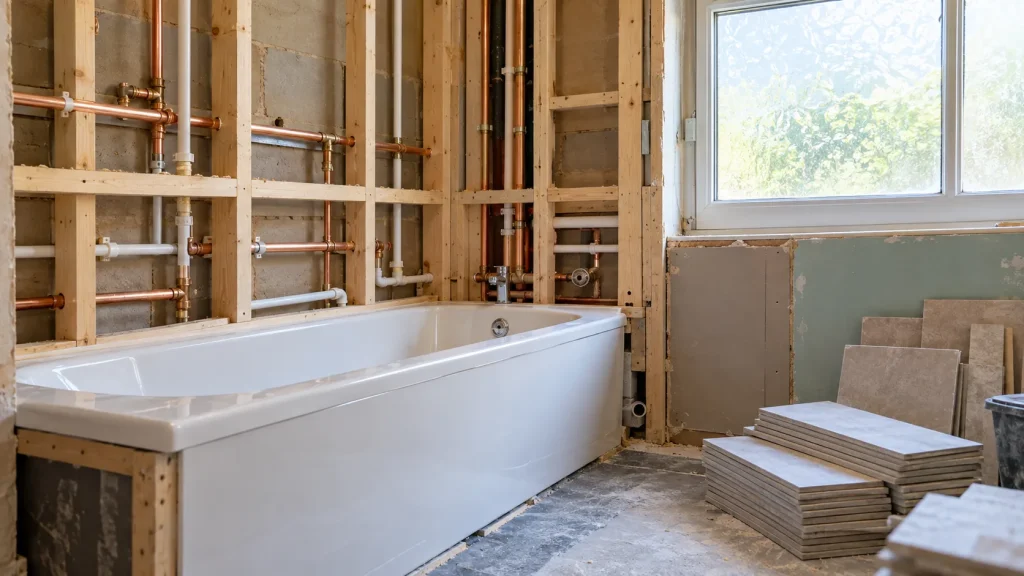
Summer is a popular time to redo a bathroom. The heating is off, the days are long, and it’s easier to live with a bit of disruption. Before you fall in love with a rainfall shower or a freestanding bath, though, it pays to check the plumbing can support it. The main things to sort early are the type of shower, your water pressure, whether anything is moving, how your hot water is supplied, and ventilation. Our bathrooms page shows how we can help. We cover homes right across North Somerset, including Yatton and Long Ashton.
Start with your hot water system
What you can have in a bathroom depends a lot on how your home gets its hot water.
- Combi boiler: heats water as you use it, so you never run out, but the flow is shared. Running a shower and a tap at the same time can reduce the flow to both.
- Hot water cylinder: stores hot water, so a large bath or several showers in a row can empty it. The size of the cylinder matters.
If you’re adding a second bathroom or a much bigger shower, it may be worth checking whether your current system can keep up.
Choosing the right shower
Mixer shower
A mixer shower blends hot and cold water from your existing supply. It works well with a combi boiler or a mains-pressure cylinder, provided the pressure and flow are good enough.
Electric shower
An electric shower heats cold water as it’s used, so it doesn’t rely on your boiler. It’s a useful option if hot water is limited, but it needs its own suitable electrical supply.
Rainfall and large shower heads
Big shower heads use more water. Check your water pressure and flow before you buy, or the result can be disappointing.
Moving things around
Keeping the toilet, basin and bath or shower roughly where they are now usually keeps costs down. Moving them can mean new pipework and new waste routes. Toilets in particular need a suitable route for the waste pipe. It’s all possible in many cases, but worth discussing with your plumber before you finalise the layout.
Don’t forget ventilation and electrics
Bathrooms produce a lot of moisture. An extractor fan helps prevent condensation, mould and damage to new decoration. Building regulations set requirements for ventilation in bathrooms, and any electrical work in a bathroom, including lighting, fans and electric showers, should be carried out by a qualified electrician.
Timing the work
A typical renovation involves strip-out, plumbing, electrics, plastering, tiling and fitting. Getting the plumbing first fix done properly before walls are tiled saves problems later. Order your bathroom suite early, as delays on deliveries can hold up the whole job.
Bathrooms in North Somerset homes
Many homes around Nailsea, Yatton and Clevedon have small family bathrooms, often with an airing cupboard and cylinder nearby. Some owners take the chance during a renovation to swap to a combi boiler and reclaim the cupboard space, while others keep the cylinder to run several showers. Either can work, so it’s worth talking it through. If your boiler is near the end of its life anyway, our boiler installation page explains the options.
Frequently asked questions
Will my combi boiler run a rainfall shower?
It depends on your boiler’s output and your mains water pressure and flow. Some combis run large showers well, while others struggle, especially if someone else is using a tap. Your plumber can check the flow and pressure before you choose a shower.
Can I move my toilet to a different position?
Often, yes, but it depends on whether a suitable route can be found for the waste pipe. Moving a toilet a short distance is usually simpler than moving it to the other side of the room. Discuss it at the planning stage.
Do I need an extractor fan in my bathroom?
Building regulations set ventilation requirements for bathrooms, and an extractor fan is the usual way to meet them. It also helps prevent condensation and mould. The fan should be fitted by a qualified electrician.
Planning a new bathroom?
If you’re thinking about a bathroom renovation, give us a call on 01275 846 437 or drop us a message and we’ll come and talk through what will work in your home.