




The clocks are about to go back, the evenings are drawing in and the heating is starting to come on for real. Before it runs all winter on last year’s settings, it’s worth ten minutes with the controls. The short answer for most North Somerset homes: set the room thermostat to a comfortable 18 to 21°C, programme the timer around when you’re actually in, use TRVs to turn down rooms you don’t use, and ask your engineer about a lower boiler flow temperature. If your controls are hard to use, our smart heating page explains the upgrades we fit. We cover homes right across North Somerset, including Yatton and Long Ashton.
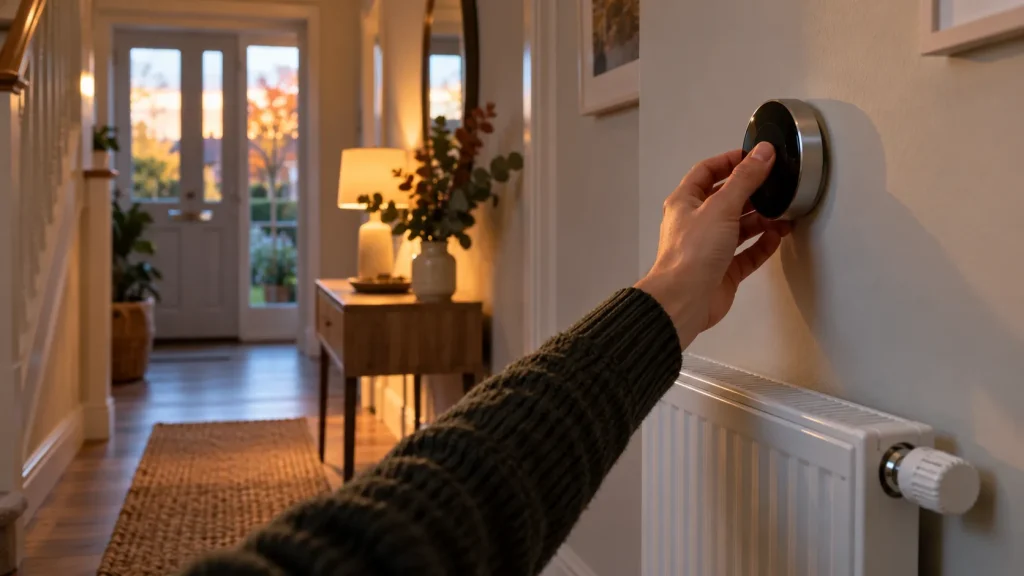
Start with the room thermostat
The room thermostat tells the boiler when the house is warm enough. Turning it up doesn’t heat the house faster; it just keeps the boiler running longer.
Pick a setting that feels right and leave it there. Many households find somewhere between 18 and 21°C comfortable. If someone in the house is elderly, very young or unwell, a warmer setting may be needed.
The thermostat should be in a room you use, away from radiators, sunny windows and draughty doors.
Programme the timer around your week
Your timer decides when the heating is allowed to run. Check the times still fit your winter routine.
A few practical points:
- Bring it on a little before you get up or come home, and let it switch off a little before you leave or go to bed.
- Set weekends separately if your programmer allows it.
- Check the clock after the clocks change on the last Sunday of October. Some older programmers don’t adjust themselves.
- Use a frost setting if you go away, rather than switching everything off.
Use TRVs to heat the rooms you use
Thermostatic radiator valves (TRVs) are the numbered heads on most radiators. They control the temperature of each room, so the spare bedroom doesn’t need to be as warm as the living room.
As a rough guide, a lower number suits bedrooms and rooms you rarely use, while a middle setting suits living areas. Leave the radiator in the room with the main thermostat fully open, otherwise the two controls fight each other.
Before winter, turn each TRV from minimum to maximum a few times. Valves that have sat closed all summer can stick, leaving a radiator cold when you need it.
Ask about your boiler flow temperature
The flow temperature is how hot the water leaving the boiler is. Many combi boilers are set higher than they need to be. A condensing boiler works most efficiently when the water coming back to it is cool enough for it to recover heat from the flue gases.
Lowering it means the radiators run a little cooler for longer, which in many homes is just as comfortable. It isn’t right for every system, though. We can check and adjust it as part of a service, or talk you through the controls on your boiler.
Are smart controls worth it for North Somerset homes?
Smart thermostats and smart TRVs let you control the heating from your phone and set different schedules for different rooms. They help most where people come and go at different times. In older, larger properties around Clevedon, Portishead and Nailsea, room-by-room control can stop the whole house being heated to the same temperature all day. If you have underfloor heating on one floor and radiators on another, separate zones and schedules make a real difference.
Smart controls work alongside a healthy heating system, not instead of one. If radiators are cold at the bottom or the boiler is struggling, it’s worth having the central heating looked at first.
Frequently asked questions
Is it cheaper to leave the heating on low all day?
Generally, no. In most homes it uses less energy to heat the house when you need it and let it cool when you don’t. Very well insulated homes and heat pumps can be exceptions, as they suit longer, steadier running. Your thermostat and timer settings matter more than leaving it on constantly.
What temperature should my thermostat be set to in winter?
Many people are comfortable between 18 and 21°C. Start around the lower end and turn it up one degree at a time until it feels right. Households with elderly or vulnerable people may need it warmer, so set it to suit the people living there.
Should I turn radiators off in rooms I don’t use?
Turn the TRV down to a low setting rather than off completely. Keeping a little heat in unused rooms helps prevent condensation and damp, and stops cold rooms pulling heat from the rest of the house. The frost setting on most TRVs is useful for spare rooms.
Can I lower my boiler flow temperature myself?
On many boilers the flow temperature is adjustable from the front controls, and the manual explains how. If you’re unsure, or your boiler also heats a hot water cylinder, ask a Gas Safe engineer to check the right setting for your system. Never remove the boiler casing.
Want your controls set up properly?
If your heating controls are confusing or out of date, give us a call on 01275 846 437 or drop us a message and we’ll come and set them up to suit how you live.